
Eight Car Maintenance Basics Every Owner Should Know in 2026
Proper maintenance is the single biggest factor in the long-term reliability of any vehicle, and it is especially critical for Japanese used cars imported to markets where dealer support may be limited. Japan's rigorous shaken inspection culture means most exported vehicles arrive in excellent mechanical condition — but maintaining that standard in your home country requires understanding the fundamentals. Here are eight essential maintenance basics every owner should perform.
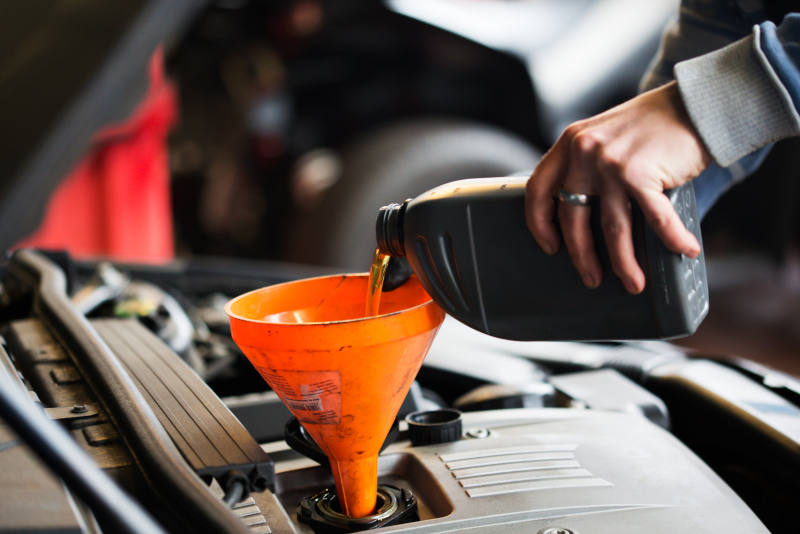
1. Engine Oil and Filter Changes
Engine oil is the lifeblood of any combustion engine. For most naturally aspirated Japanese engines, change oil every 5,000-7,500 km using the manufacturer-specified viscosity (typically 0W-20 or 5W-30 for modern Toyota and Honda engines). Turbocharged engines (Subaru EJ/FA, Mitsubishi 4G63/4B11, Nissan RB/SR) are more sensitive to oil quality and require changes every 5,000 km with a quality synthetic such as Mobil 1 or Castrol Edge. Always replace the filter at every oil change. Use OEM or OEM-equivalent filters — genuine Toyota, Honda, and Nissan filters are inexpensive and widely available.
2. Air Filter Inspection and Replacement
A clogged air filter reduces fuel economy and engine power. Inspect every 15,000 km; replace every 30,000 km or sooner in dusty environments (common in East Africa, the Middle East). Paper filters cost USD 10-25 for most Japanese vehicles; high-flow aftermarket filters (K&N, HKS) offer slightly better airflow and are washable/reusable.
3. Spark Plug Replacement
Modern Japanese engines use iridium or platinum spark plugs with intervals of 60,000-100,000 km. Standard copper plugs require replacement every 20,000-30,000 km. Misfires and rough idle are the first symptoms of worn plugs. NGK and Denso are the dominant OEM suppliers for Japanese vehicles — use the correct heat range as specified in the owner's manual.
4. Coolant System Maintenance
Check coolant level and color every 6 months. Fresh coolant is typically blue, green, or pink — brown or rust-colored coolant indicates oxidation and needs flushing immediately. Most Japanese vehicles specify a full coolant flush every 2 years or 40,000 km. Use only the correct coolant type (Toyota LLC, Honda Type 2, Nissan Blue) — mixing incompatible types causes gel deposits and thermostat failures.
5. Brake Inspection
Check brake pad thickness at every tire rotation (every 10,000-15,000 km). Most Japanese vehicles have a wear indicator that produces a squealing noise when pads reach 2-3mm. Inspect brake fluid level and color annually — dark brown fluid absorbs moisture and should be flushed every 2 years. Brake rotors on Japanese vehicles are typically adequate for road use but may warp under sustained heavy braking in mountainous terrain; aftermarket rotors from DBA or Brembo are recommended for high-load applications.
6. Tire Pressure and Rotation
Check tire pressure monthly — incorrect pressure is the leading cause of premature tire wear and fuel economy loss. Most Japanese compact and midsize vehicles specify 32-35 PSI front and rear. Rotate tires every 10,000 km to equalize wear. Check alignment annually or after any significant impact — a misaligned vehicle causes rapid uneven tire wear and poor handling.
7. Transmission Fluid
CVT and automatic transmission fluid (ATF) is the most commonly neglected service item. Many Japanese CVT manufacturers specify "lifetime" fluid, but in practice CVT fluid should be changed every 40,000-60,000 km for reliable operation, especially on Toyota, Nissan, and Honda CVT models common in the used export market. Degraded CVT fluid is the leading cause of expensive CVT failures on high-mileage imported vehicles.
8. Battery Health
Japanese car batteries typically last 3-5 years. In high-temperature markets (Middle East, East Africa), expect 2-3 years due to heat-induced electrolyte evaporation. Test battery health annually using a battery tester (load test or conductance test). Modern OBD-II diagnostic tools used by workshops can read battery state-of-health alongside fault codes. Replace with a Panasonic, Bosch, or GS Yuasa battery matched to the vehicle's CCA (cold cranking amps) specification.
Key Facts
- Most critical items: Engine oil, CVT/ATF fluid, coolant — neglecting these causes the most expensive failures
- OEM parts source: Japanese OEM parts are available globally via wholesalers at 30-50% below dealer pricing
- Diagnostic tools: A quality OBD-II scanner (Autel, Launch, or even a Bluetooth ELM327 with app) enables any owner to read fault codes before visiting a workshop
- 2026 tip: AI-based diagnostic apps (e.g., Fixd, CarScanner Pro) now interpret OBD codes and maintenance schedules in plain language — useful for owners in markets with limited Japanese vehicle expertise