
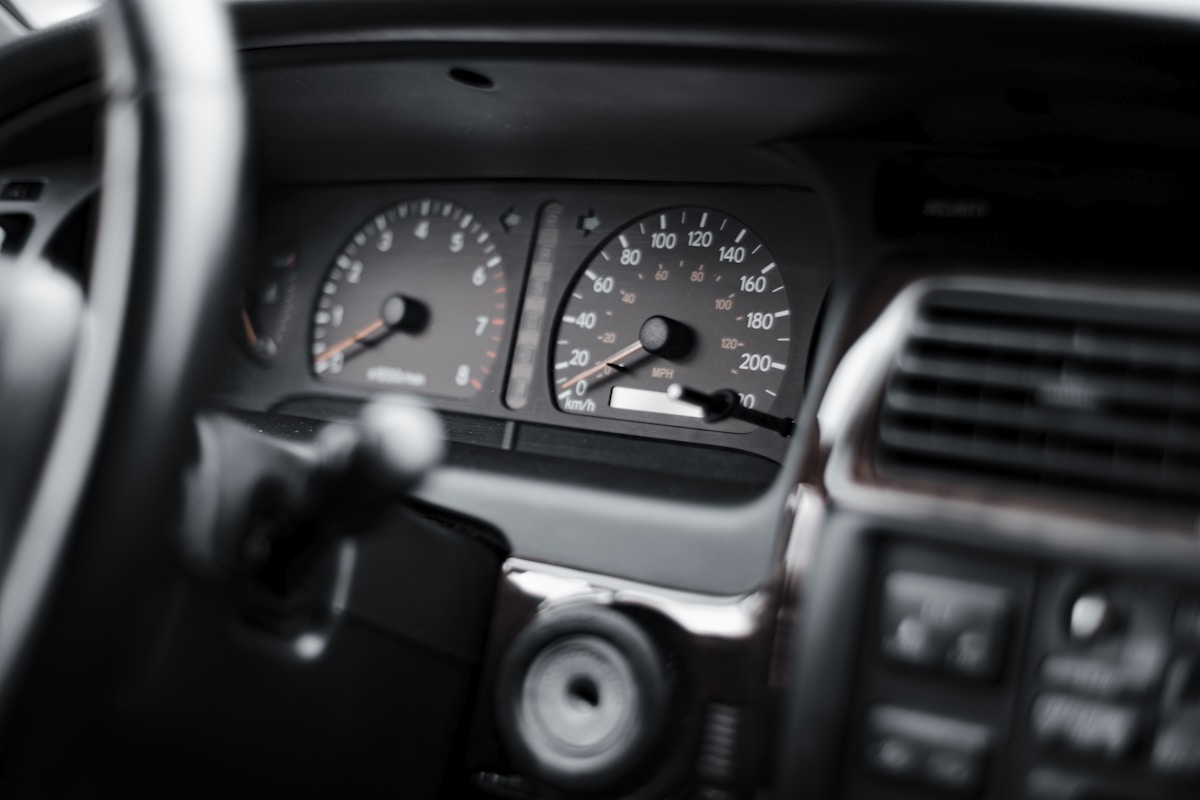
If you're buying a Japanese used car for export, you almost certainly never see the odometer turn over in person — you see a number printed on an auction sheet, maybe a dashboard photo, and you have to decide whether to trust it. Most of the time the number is accurate. Sometimes it isn't. This guide is for overseas buyers and importers who want to know exactly which auction-sheet symbols, paperwork mismatches, and photo details can expose a tampered odometer before money changes hands — not after.
Why Mileage Gets Tampered With in the First Place
The incentive is simple: a car with 60,000 km on the clock is worth meaningfully more than the same car with 160,000 km, even if the second car has actually been better maintained. Rolling back a mechanical odometer or reprogramming a digital one is illegal in Japan and in virtually every destination market, but the financial upside — sometimes thousands of dollars added to a single sale — means it keeps happening anyway, particularly on older vehicles where some of the paper trail that would normally catch it has gone missing.
Exact figures on how common tampering is in the current export pipeline aren't independently verified, and estimates you'll see quoted online vary a lot depending on the source and how "discrepancy" is defined — a small gap between a sticker and the odometer isn't the same thing as a deliberate rollback. What every exporter, inspector, and auction house agrees on is that it's common enough to be worth checking for on every car, not just the ones that look suspicious.
Is Odometer Tampering Actually Illegal?
Yes. Altering an odometer to misrepresent a vehicle's true mileage to a buyer is treated as fraud under Japanese law, and most countries that import Japanese used cars have their own odometer-fraud or consumer-protection statutes that would apply if a tampered car were knowingly resold domestically after import. In practice, though, criminal enforcement against the original tamperer is rarely the buyer's recourse — by the time a rolled-back car has been exported, resold, and discovered, tracing and prosecuting whoever changed the meter is generally impractical. The realistic protection for an overseas buyer is catching it before purchase, not pursuing it afterward.
The Symbols That Mean "Mileage Not Confirmed"
This is the first and easiest check, and it's printed right on the auction sheet. Next to the odometer reading, most major auction houses — USS, TAA, JAA, and ARAI among them — will print one of a small set of marks when they cannot confirm the displayed mileage is genuine:
- * (asterisk) — the inspector has reason to believe the odometer may have been changed and has not been shown documentation proving a legitimate reason (such as a meter or cluster replacement after a repair).
- # — mileage unconfirmed, for a similar reason: missing or contradictory service history at the time of inspection.
- $ — also used by some auction houses to flag unconfirmed mileage; treat it the same as the symbols above unless the specific auction's printed legend says otherwise.
None of these symbols is proof of fraud on its own. A meter replaced after a legitimate repair, a very old car with a five-digit odometer that has rolled over once already, or simply a gap in the paperwork the inspector had on hand at the time can all trigger the same flag. What the symbol actually tells you is narrower and more useful than "this car is clocked": it tells you the auction house itself isn't vouching for the number, which means you shouldn't either without asking more questions. For the rest of the grading conventions on the sheet — overall condition grade, interior grade, the damage diagram shorthand — see our companion guide, How to Read a Japanese Car Auction Sheet.
How Auction Houses Catch Repeat Offenders
A meaningful share of vehicles that go through Japanese auctions have been there before — bought by a dealer, reconditioned, and re-listed, sometimes more than once before they're finally bought for export. That history works in the buyer's favor. Auction houses keep their own inspection records tied to each vehicle's chassis number, and if a car's previously recorded mileage at an earlier auction appearance is higher than what's listed today, that's a contradiction the auction house's own paperwork can catch — independent of any sticker, service book, or seller claim. This is one of the reasons unconfirmed-mileage flags tend to cluster on cars that have only been through the auction system once: with no prior auction record to check against, there's simply less for the system to contradict.
Four Documents That Can Confirm or Contradict the Odometer
Beyond the auction sheet itself, a genuine vehicle accumulates a paper trail that a rolled-back odometer can't retroactively rewrite. If your exporter can provide any of the following, cross-check the mileage figure on each against the auction sheet:
- The shaken (vehicle inspection) certificate. Most passenger cars in Japan require inspection three years after first registration and every two years after that, and the certificate or the inspector's record typically notes the mileage at the time of that inspection. A shaken record showing a higher mileage at an earlier date than what's on today's auction sheet is a hard contradiction, not a coincidence.
- The export certificate. Mileage recorded for export deregistration purposes should be consistent with the auction sheet figure, assuming little time has passed between sale and export.
- The maintenance booklet (if the car has one). Dealer service stamps usually include the mileage at each visit. A logical, ascending sequence of numbers is reassuring; gaps, crossed-out entries, or a sudden drop are not.
- Oil-change and timing-belt stickers in the engine bay. Many Japanese workshops apply a small sticker noting the mileage (and sometimes the date) of the last service. A timing-belt sticker is particularly useful because that service is typically done around 100,000 km — if the sticker says a belt was changed at 110,000 km and the odometer now reads 70,000 km, the odometer is the one that's wrong.
You won't always get all four. Even one that contradicts the displayed mileage, though, is enough reason to stop and ask questions before bidding or paying a deposit.
Physical Tells You Can Check From Photos
You're working from photos, not a hands-on inspection, but a few physical signs travel reasonably well through a photo set if your exporter takes — or can be asked to take — the right shots:
- Wear that doesn't match the number. A steering wheel with the leather worn through, a driver's seat bolster that's collapsed or shiny with use, and pedal rubber worn down to the tread pattern are all consistent with high mileage. Seeing heavy wear like that on a car claiming under 50,000 km is worth a direct question.
- Mismatched digit spacing or alignment on a mechanical-style odometer display. On older vehicles with drum-style mechanical odometers, a rolled-back reading can sometimes show slightly uneven spacing or alignment between digits compared to a genuine, unmodified unit. It's subtle and not always visible in a photo, but it's worth a zoomed-in look at the cluster if one is available.
- Scratches or pry marks around the instrument cluster bezel. Both mechanical rollback and digital cluster swaps generally require removing the dashboard surround. Fresh scratch marks around the cluster's edge, inconsistent with the rest of the dashboard's condition, are a tell.
- A general condition that doesn't match the grade. This is really the same logic as the auction sheet's own grading system, just applied with mileage fraud specifically in mind: if a "low-mileage" car has tire wear, paint fading, and interior condition you'd expect from a much higher-mileage example, trust the visible wear over the printed number.
Paid History Checks: Worth It for a High-Value Purchase?
A number of independent inspection and history-check services will search a vehicle's chassis number against auction and inspection records for a fee, returning a short report that can include prior auction appearances, recorded mileage at each one, and any flags raised by past inspectors. Coverage isn't complete for every vehicle — older cars and ones that have changed hands privately rather than through auction will have thinner records — and the fee is a real cost to weigh against the price of the car. For a high-value purchase, though, a report that costs a small fraction of the car's price is generally good insurance, particularly on a vehicle where the auction sheet already carries an unconfirmed-mileage symbol.
What To Do If You Suspect a Car's Mileage Has Been Tampered With
Ask before you commit, not after. A reasonable, low-pressure exporter will be able to get you a clearer scan of the auction sheet, additional photos of the cluster and engine bay, and a direct answer about whether any of the four documents above are available for that specific car. If the explanation is vague, the photos you ask for don't materialize, or the seller pushes you to decide quickly without answering — treat that reluctance itself as information. There are enough genuine, well-documented cars going through Japanese auctions every week that walking away from one with an unresolved mileage flag rarely means missing your only option.
If you do decide to proceed despite an unconfirmed-mileage flag — sometimes justified for an otherwise excellent car at the right price — negotiate the price as if the higher, unverifiable mileage estimate is the real one, not the number on the clock.
How This Fits Into Buying Through Japanese Auto World
Every exporter listed in the Japanese Auto World directory works from the same starting point: an auction sheet that either confirms the mileage or flags that it can't. Knowing how to read that flag — and knowing which follow-up documents to ask for — is what separates a buyer who gets a fair price on a flagged car from one who gets stuck overpaying for one. For the rest of the sheet's grading conventions, our companion guide on reading a Japanese auction sheet covers the condition grade and damage-diagram side of the same document.
Frequently Asked Questions
Does an unconfirmed-mileage symbol mean the car has definitely been clocked?
No. It means the auction house isn't vouching for the number, which can happen for innocent reasons like a legitimate meter replacement or missing paperwork at inspection time. It's a reason to ask for more documentation, not an automatic disqualifier.
What's the single most useful document for double-checking mileage?
If you can get it, the shaken (inspection) record, since it logs mileage at a fixed, verifiable point in time that's independent of the seller. A timing-belt or oil-change sticker in the engine bay is a good second option when shaken history isn't available.
Can I trust the mileage on a car with no auction-sheet warning symbol at all?
Generally, yes — the absence of a warning symbol means the auction's inspector had no specific reason to doubt the figure at the time of inspection. It's not an absolute guarantee, but it's a meaningfully stronger position than a flagged car, and for most buyers it doesn't need further verification beyond normal due diligence.
Is it ever reasonable to buy a car with a mileage warning flag?
Yes, if the price reflects the uncertainty and the rest of the car's documentation and condition check out. Many flagged cars have entirely legitimate explanations. The mistake isn't buying a flagged car — it's paying full price for one without asking why it's flagged.
Do destination countries enforce odometer fraud after import?
Many have consumer-protection or fraud statutes that could apply to someone who knowingly resells a tampered car domestically, but enforcement against the original source in Japan is a separate and much harder matter for an individual overseas buyer to pursue. Prevention before purchase is the realistic safeguard.
Sources & further reading: this guide reflects auction-sheet conventions and odometer-verification practices described consistently across major Japanese vehicle export and inspection industry sources as of June 2026. Auction houses publish their own legends on each sheet, which should always take precedence over general guides, including this one.