
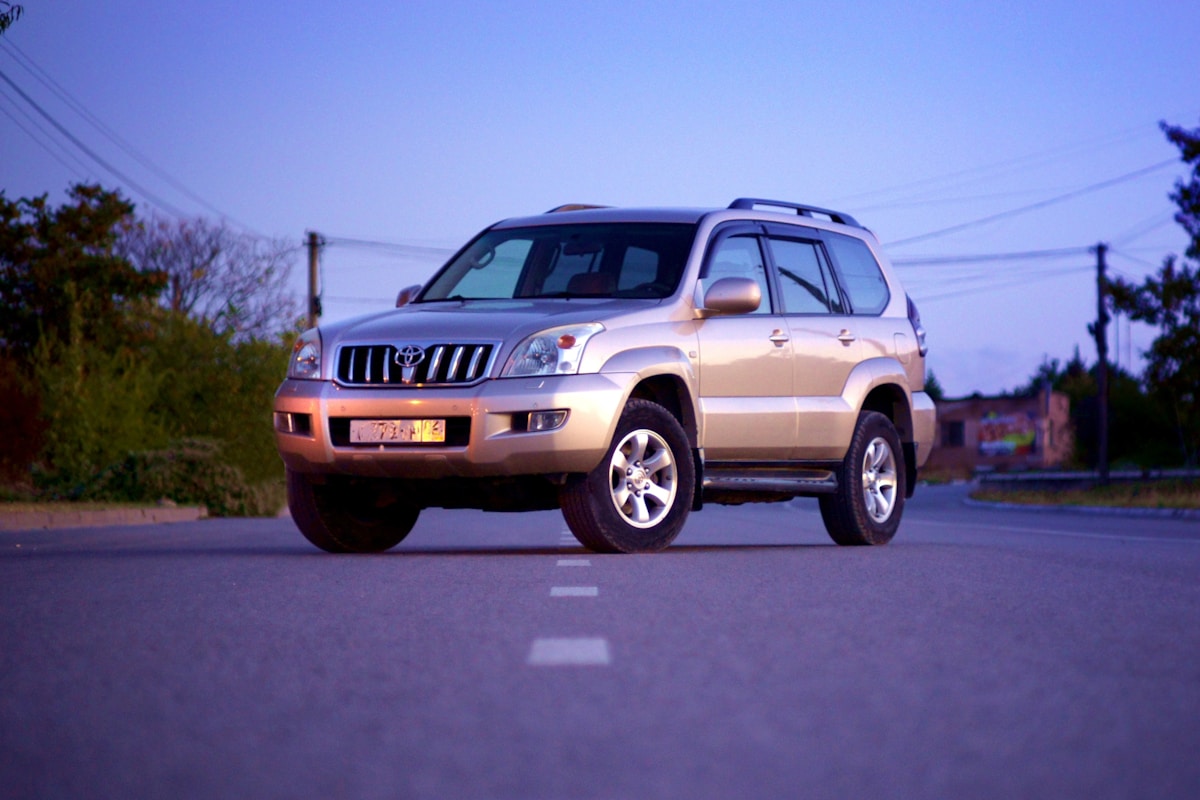
If you're shortlisting a used Toyota Land Cruiser Prado from a Japanese auction or an exporter's stock list, this guide is for you. It's written for overseas buyers, fleet operators, and first-time importers who want to know what tends to go wrong on a Prado before money changes hands — not after. The Prado has been built across four distinct generations with several very different engines, and "it's a Prado" tells you almost nothing about what you're actually buying until you check the chassis code, engine code, and auction sheet notes together.
Which Prado Generation Are You Actually Looking At?
Japanese auction houses and exporters typically reference a Prado by its chassis series — J90, J120, J150, or J250 — rather than just "Land Cruiser Prado," and that series tells you far more than the model name alone. Broadly, the lineup breaks down as follows:
- J90 (roughly 1996–2002): The first generation built on its own dedicated Prado platform. These are now well over two decades old, so good examples are increasingly rare and condition varies enormously. Valued mainly for mechanical simplicity rather than refinement.
- J120 (roughly 2002–2009): A boxier, more rugged-looking generation that's generally well regarded for durability. Owners commonly report well-maintained examples passing 250,000–300,000 km without major drivetrain work, though specific issues below are worth checking.
- J150 (roughly 2009–2023, with facelifts around 2013, 2017–2018, and 2020): The generation most overseas buyers encounter today, sold for over a decade with several engine and equipment changes along the way. Because of this, two J150s a few years apart can have meaningfully different engines and electronics underneath the same basic body.
- J250 (2023–present): The current generation. As of 2026 it's still quite new to the used export market, so there's limited long-term reliability data — treat any "common issues" claims about this generation with caution until more high-mileage examples exist.
Because the same model name covers nearly three decades of very different vehicles, always confirm the chassis code and engine code in writing rather than assuming based on the year or photos alone.
Engine Codes and Their Reliability Track Records
The engine code matters more than almost anything else on the spec sheet. Here's how the common Prado engines compare, based on what mechanics and long-term owners report most often:
Engine code
Type
Displacement
Typically found in
What to know
1KZ-TE
Diesel, turbo
3.0L
J90
Mechanically simple by modern standards. Cooling system condition and head gasket history are the main things to check on examples this old.
5VZ-FE
Petrol V6
3.4L
J90
Generally durable, but crankshaft oil seal leaks are a commonly reported nuisance fault on higher-mileage units.
1KD-FTV
Diesel common-rail turbo
3.0L
J120, early J150 (roughly 2009–2015)
The single most-discussed Prado engine issue: pistons on Euro 4-compliant units built roughly 2009–2014 are prone to cracking, most often between 100,000–150,000 km, sometimes announced by a knocking sound, dark exhaust smoke, or power loss. Injectors on this engine also commonly need attention somewhere in the 75,000–250,000 km range, with 120,000–140,000 km being a frequently cited window. On the earlier J120 version, watch for head gasket issues, especially on vehicles used for towing.
1GD-FTV
Diesel common-rail turbo
2.8L
Late J150 (roughly 2015–2023), J250
Toyota's newer common-rail diesel. Reports of high oil consumption and rough running on very early units prompted software updates; later production is generally considered improved. DPF clogging is a recurring complaint on vehicles used mostly for short, low-speed trips rather than sustained highway driving.
1GR-FE
Petrol V6
4.0L
J120, J150
Widely regarded as one of the more dependable engines in the lineup, though it uses noticeably more fuel than the diesels — a real consideration for some import markets.
2TR-FE
Petrol
2.7L
J120, J150
Simpler and generally cheaper to maintain than the diesels or the V6. Intake carbon buildup is the most frequently mentioned issue on higher-mileage examples.
As a general rule, the petrol engines (5VZ-FE, 1GR-FE, 2TR-FE) trade fuel economy for fewer high-pressure fuel-system parts that can fail, while the common-rail diesels (1KD-FTV, 1GD-FTV) are more efficient and torquey but considerably less forgiving of poor fuel quality, skipped services, or short, stop-start driving.
Common Issues to Check Before You Buy
None of the following automatically rules out a particular Prado — these are simply the points worth specifically asking about or inspecting for, regardless of how clean the vehicle looks in photos:
- Piston cracking on 2009–2014 1KD-FTV engines: Ask whether the specific vehicle has had any injector or piston-related work, and listen for knocking on a cold start.
- Injector wear (1KD-FTV and 1GD-FTV): High-pressure common-rail injectors are a wear item, not a defect, but cost real money to replace. Ask when they were last serviced.
- DPF and EGR carbon buildup (1GD-FTV): More common on vehicles that did mostly short or urban trips. A logged DPF warning history, if available, is worth asking about.
- KDSS suspension faults, where fitted: Covered in more detail below — this is one of the more expensive systems to repair if it has failed.
- Dashboard cracking: A commonly reported cosmetic issue on J150s, particularly vehicles that spent time in hot climates. Not a mechanical problem, but worth factoring into your offer.
- Rear door or tailgate sag: Check that the tailgate closes flush and the hinges aren't visibly stressed.
- Cooling system condition on older J90/J120 units: Check coolant condition and look for residue around the radiator or expansion tank, especially on the 1KZ-TE.
- Timing belt vs. timing chain: Some older Prado engines use a timing belt with a defined replacement interval, while the newer common-rail diesels use a chain. Confirm which your specific engine has and don't assume — the service implications are very different.
It's also worth checking whether any safety recall applies to the specific VIN you're considering — for example, a 2014 campaign covered certain diesel J150 Prados built within a narrow window around 2009–2010 over a potential airbag wiring fault. Recall campaigns and remedy availability vary by the market the vehicle was originally sold into, so confirm directly with Toyota or your exporter rather than assuming a recall has or hasn't been completed.
KDSS Suspension: Worth Knowing Before You Bid
Many higher trim grades of the Prado — particularly from the J120 onward — are fitted with Toyota's Kinetic Dynamic Suspension System (KDSS), a hydraulic system that links the front and rear sway bars to improve both on-road handling and off-road articulation. It's a clever piece of engineering, but it's also one of the more expensive things to fix if it goes wrong.
Reported symptoms of a failing KDSS system include uneven ride height side to side (sometimes called a "KDSS lean"), clunking or banging noises over bumps, and dashboard warning messages. Causes range from a failing hydraulic accumulator or leaking lines to worn bushings. Repair costs are reported anywhere from a few hundred dollars for a minor sensor or bushing fix up to several thousand dollars for accumulator or major component replacement — the range is wide and depends heavily on your local market and parts availability, so treat any specific figure as directional rather than a quote. If you're considering a KDSS-equipped Prado, it's worth asking your exporter or inspector to specifically check for ride-height symmetry and listen for suspension noise over bumps before you bid.
Reading the Auction Sheet Before You Commit
For an SUV like the Prado, the auction sheet's written inspector remarks often matter as much as the headline grade. A vehicle can carry a respectable overall grade while the inspector's free-text comments mention engine noise, smoke, an electrical fault, or suspension concerns — details a single grade letter won't capture on its own. If you haven't already, it's worth getting familiar with how Japanese auction grading actually works before you start shortlisting Prados; our grade-by-grade auction sheet guide and our R vs. RA vs. A grade cheat sheet cover this in detail.
- R and RA grades (indicating prior repair or repainting) do appear on Prados, particularly higher-mileage 4x4 examples, and aren't automatically a red flag — but you should know about them before bidding, not after.
- Ask for the actual auction sheet image, not just a verbal summary. Diagram codes for panel and underbody condition, and the inspector's handwritten or printed comments, both matter.
- Ask specifically whether the sheet notes anything about engine sound, smoke, suspension warning lights, or odometer concerns — these are sometimes flagged separately from the overall grade.
Mileage and Usage History
Many Prados sold at auction had a working life that included some off-road or rural use, towing, or extended highway running — none of which ages a vehicle the same way as purely urban commuting. A 4x4 with genuine off-road history can show different wear patterns (undercarriage scrapes, suspension wear, mud in less obvious places) than a Prado that spent its life on tarmac, even at similar odometer readings.
It's worth checking the service booklet (if included) for maintenance stamps, and doing a basic plausibility check: does interior wear on the seats, pedals, and steering wheel roughly match the claimed mileage? Some auction houses will flag a suspected odometer discrepancy directly on the sheet, which is another reason to request the actual sheet image rather than a paraphrased summary.
Pre-Purchase Checklist for Overseas Buyers
- Get the chassis code (J90/J120/J150/J250) and engine code confirmed in writing, not just "Land Cruiser Prado."
- Request the full auction sheet image and as many photos as the exporter can provide, including engine bay, underside, and KDSS components if the vehicle has the system.
- Ask when the injectors, timing belt or chain, and fuel filters were last serviced or replaced.
- Ask for a cold start-up video if you can't inspect in person — listen for knocking, watch for exhaust smoke, and check ride height looks even on both sides.
- Ask whether the auction sheet's written comments mention engine noise, smoke, suspension faults, or electrical warning lights.
- Check whether any manufacturer recall applies to the specific VIN, and ask your exporter whether it's been completed.
- Budget for an independent pre-export or post-import inspection regardless of how good the auction grade looks on paper.
What to Budget for After It Lands
Costs vary a lot by destination market, local labor rates, and parts availability, so treat the following as general guidance rather than fixed pricing. On 1KD-FTV and 1GD-FTV diesels, budget for injector servicing as a likely future cost on higher-mileage units, and have the DPF system checked if the vehicle's history suggests mostly short trips. If the vehicle has KDSS, a basic inspection of the accumulator and ride height is a sensible early step even if nothing seems wrong yet.
On the positive side, the Land Cruiser Prado is one of the most widely exported and well-understood 4x4s in the world, which generally means decent aftermarket parts availability and competition among suppliers in most import markets — one reason it remains such a popular choice for buyers who want a vehicle they can keep running long-term without constantly chasing rare parts.
FAQ
Which Prado generation is the most reliable to import?
There's no single answer that fits every market. The J120 (2002–2009) is widely regarded as a strong, durable generation overall, while the J150 (2009–2023) offers more modern features but comes with engine-specific issues to check depending on the exact production year. The J90 is now quite old and condition varies enormously example to example. The J250 is too new for meaningful long-term data as of 2026.
Is a diesel or petrol Prado better for importers?
It depends on local fuel quality and your priorities. The diesel engines (1KD-FTV, 1GD-FTV) are generally more fuel-efficient and torquey, but their common-rail fuel systems are sensitive to poor-quality diesel and contamination. The petrol engines (2TR-FE, 1GR-FE) are typically simpler and more tolerant of inconsistent fuel quality, which matters more in markets where diesel quality can't be guaranteed.
How many kilometres can a Prado diesel realistically do?
Well-maintained Prado diesels are commonly reported reaching several hundred thousand kilometres, but this depends heavily on service history, fuel quality, and how the vehicle was used. Treat any specific mileage claim from a seller as a starting point for inspection, not a guarantee.
Is KDSS suspension worth the extra risk?
KDSS genuinely improves both on-road comfort and off-road capability, and many owners never have an issue with it. The trade-off is that repairs, when needed, tend to cost more than a conventional suspension fault. If you're buying a KDSS-equipped Prado, it's worth having the system specifically checked rather than assuming it's fine because nothing looks obviously wrong.
What auction grade should I look for on a Prado?
There's no universal "safe" grade for a 4x4 that may have seen genuine off-road or towing use. What matters more is reading the inspector's written comments alongside the headline grade and asking specifically about engine, suspension, and electrical condition. See our auction sheet guides linked above for more detail on how to read a sheet properly.
A Land Cruiser Prado can be one of the most dependable vehicles you import, provided you match the engine code and generation to your local conditions and don't skip the basic checks above. When in doubt, ask your exporter for more documentation before you bid — it's a far cheaper step than discovering an issue after the vehicle has already shipped.