
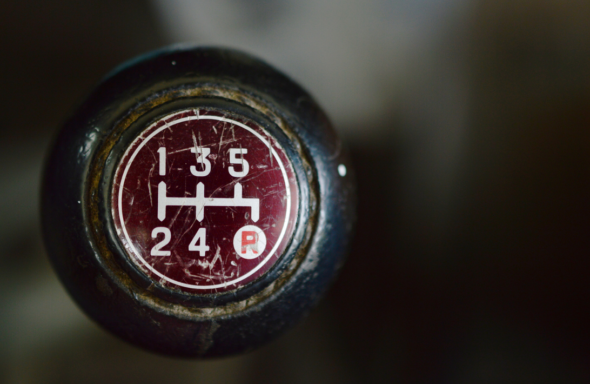
Would the Death of the Manual Transmission Be Such a Bad Thing?
Manual transmissions are vanishing from the global automotive market. In 2010, roughly 35% of new cars sold in the US had a manual gearbox; by 2025 that figure had dropped below 2%. In Japan — traditionally a market where compact cars featured manual options — the picture is similar, with CVT and automatic transmissions dominating new car sales. But does this matter? And for buyers in the used Japanese car market, what does it mean practically?
The Case Against Mourning the Manual
Modern automatic and CVT transmissions have closed the gap on many of the manual's traditional advantages. The dual-clutch transmission (DCT), as used in the Honda Civic Type R (FK8/FL5), Volkswagen GTI, and Mitsubishi Lancer Evo X (SST), shifts faster than any human and offers automated efficiency in traffic. Toyota's Direct Shift CVT — used in the Corolla Cross, Yaris, and CH-R — mimics a stepped gear feel at low speeds while delivering superior fuel economy to a comparable manual in real-world driving. For daily commuting in cities like Nairobi, Karachi, or Dubai, where stop-go traffic is constant, an automatic is objectively less fatiguing.
The Case For the Manual
Driver engagement, repairability, and total cost of ownership remain the manual's strongest arguments. A skilled manual transmission driver can extract better fuel economy on open roads than a CVT. Manual gearboxes are also far cheaper to repair in markets with limited specialist workshops — a clutch replacement on a Hilux or Jimny costs a fraction of an ATF flush and filter change on a CVT unit. In sub-Saharan Africa and South Asia, where roads are rough, fuel quality variable, and workshop expertise limited, the mechanical simplicity of a manual drivetrain is a genuine advantage.
The JDM Used Car Market Perspective
For buyers of Japanese used cars, manual transmission availability is already limited. Most JDM-spec compact cars from 2015 onwards were produced predominantly with automatic or CVT transmissions. However, JDM-spec models worth seeking in manual include:
- Suzuki Jimny (JB64): 5-speed manual available; extremely desirable for export markets
- Honda Civic Type R (FL5, 2022-): 6-speed manual only — no automatic offered
- Toyota GR86 / Subaru BRZ: 6-speed manual available alongside 6-speed auto
- Toyota GR Yaris: 6-speed iMT (intelligent manual) standard
- Mazda MX-5 (ND): 6-speed manual — the benchmark for driver engagement
Electric Vehicles and the Manual
The shift to EVs removes the manual entirely from the equation — electric motors have no need for a gearbox. As Japan accelerates EV adoption through 2026 and beyond, the manual will become increasingly rare in the new-car market. For enthusiasts, the remaining pool of low-mileage manual JDM vehicles will likely increase in collector value over the next decade, particularly iconic platforms like the GR Yaris and Type R.
Verdict
The death of the manual transmission is mostly not a bad thing for the majority of drivers who prioritize comfort, fuel economy, and ease of use. For enthusiasts and buyers in developing markets who value mechanical simplicity and engagement, however, the manual's decline represents a genuine loss. The best approach is pragmatic: choose the transmission that best suits your driving environment and mechanical support infrastructure.
Key Facts
- Manual market share (US new cars, 2025): Under 2%
- Best JDM manuals still available used: GR Yaris, Civic Type R FL5, GR86/BRZ, Jimny JB64, MX-5 ND
- Manual advantage in export markets: Simpler repair, lower cost, better driver control on rough roads
- EV impact: Eliminates the manual entirely as EVs replace combustion engines
- Collector outlook: Manual sports cars from 2020-2026 likely to appreciate in value as rarity increases