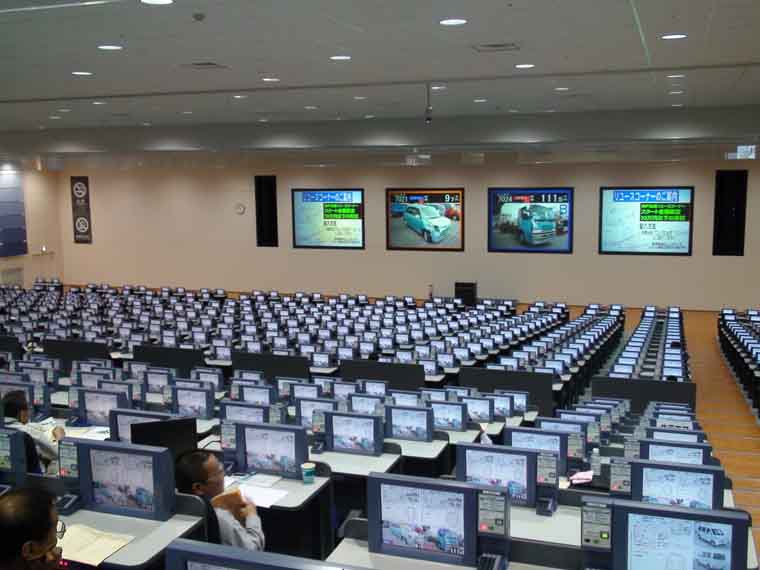
If you have read an auction sheet or two, you have probably noticed the seller or exporter mentioning a specific auction house by name — USS Tokyo, TAA Kanto, JU Nara, CAA Chubu — almost like a brand. That is because Japan does not have one national car auction; it has a patchwork of competing and overlapping networks, each with its own venues, membership rules, and inspection teams. This guide is for overseas buyers and importers who want to understand what USS, TAA, JU, CAA, and the smaller networks actually are, how they differ, and what any of it has to do with the car you eventually buy.
Why There Isn’t Just One Japanese Car Auction
Japan’s used-vehicle auction system grew out of dealer-to-dealer trading: rather than one centralized exchange, several large operators and regional dealer associations each built their own auction halls, inspection standards, and bidding software. Today a handful of nationwide networks handle the bulk of weekly volume, alongside dozens of smaller regional and manufacturer-affiliated auctions. None of them sell directly to the public — access requires a Japanese used-vehicle dealer license (commonly called a kobutsusho), which is why overseas buyers always go through a member exporter or bidding agent rather than logging into an auction site themselves.
The Major Auction Networks at a Glance
- USS — Japan’s largest auction operator by volume, with roughly 19 directly run sites plus several affiliated venues nationwide.
- TAA (Toyota Auto Auction) — an 11-venue network operated by the Toyota Group, weighted toward Toyota, Lexus, and Daihatsu trade-ins.
- CAA (Chubu Auto Auction) — a smaller, independent network of around 4 venues, led by its flagship CAA Chubu hall.
- JU (Japan Used Car Dealers Association) — not a single company but a nationwide association of roughly 10,000 member dealers, running 40-plus regional auction venues under the JU name.
- JAA, HAA Kobe, NAA, Honda Auto Auction, Arai (AI-NET), KCAA, MIRIVE, and others — smaller national or regional operators, some tied to a specific automaker’s dealer network, that add further weekly volume on top of the big four above.
Exact venue counts move as operators open or consolidate locations, so treat the numbers above as a current snapshot rather than a fixed fact.
USS: Japan’s Largest Auction Network
Founded in 1980, USS (an abbreviation of the company’s original "Used car System Solutions" name) is the volume leader among Japanese auction operators, with auction halls in major hubs including Tokyo, Yokohama, Nagoya, and Osaka. USS connects its directly run sites and affiliated venues through a satellite and internet bidding system, letting member dealers and agents bid on vehicles at any connected hall rather than only the one nearest them. Inspections are carried out by USS’s own appraisal staff using a 10-step grading scale, and because of its sheer size, USS auction sheets are the format most overseas buyers encounter first.
TAA: The Toyota Group’s Auction Network
TAA (Toyota Auto Auction) is run by the Toyota Group and operates around 11 venues spread from Hokkaido to Kyushu, including TAA Kanto, TAA Chubu, TAA Kinki, and TAA Kyushu. Because the network is fed largely by Toyota, Lexus, and Daihatsu dealer trade-ins, it tends to be an unusually deep source for those three brands specifically, alongside a broader mix of other makes. Bidding access works the same way as at USS — through a licensed dealer or an agent acting on a buyer’s behalf — via TAA’s own online bidding system.
CAA: An Independent Alternative
CAA (Chubu Auto Auction) is a smaller, independent operator unaffiliated with either USS or the Toyota Group, running about four venues including its flagship CAA Chubu hall in Aichi and CAA Tokyo. Weekly volume is lower than USS or TAA, but CAA fills a real gap in the weekly auction calendar for dealers and agents who want additional inventory beyond the two larger networks, and it uses its own TC-webΣ bidding platform.
JU: The Dealer-Association Network
JU stands for the Japan Used Car Dealers Association, and unlike USS, TAA, or CAA, it is not a single company — it is a nationwide trade association of an estimated 10,000-plus member dealers, recognized by Japan’s Ministry of Economy, Trade and Industry and Ministry of Land, Infrastructure, Transport and Tourism. JU auctions are run semi-independently under the JU name at 40 or more regional venues (sources differ on the exact current count), from JU Nara to JU Saitama, each affiliated with the prefectural dealer association in its area. Vehicles can be browsed and bid on across the network through shared online systems such as JU Bid Network and AS-Net, so a regional JU venue is not necessarily limited to local buyers.
Smaller and Specialist Networks
Beyond the big four, a long tail of smaller operators adds meaningful weekly volume: JAA, HAA Kobe, Arai Auction (with its AI-NET online bidding service), KCAA, and MIRIVE among independents, plus manufacturer-affiliated auctions such as NAA (Nissan Auto Auction) and Honda Auto Auction that deal primarily in trade-ins from their respective dealer networks. None of these are necessarily lower quality than the major four — they simply have smaller catalogs and more regional or brand-specific focus, which is exactly why a good exporter or bidding agent will typically have access to more than one network rather than relying on a single auction house.
Can Overseas Buyers Bid Directly?
No — with rare exceptions, every major Japanese auction network requires bidders to hold a Japanese used-vehicle dealer license, which overseas individuals and most overseas companies do not have. In practice this means you access these auctions in one of two ways: through an exporter who already holds dealer access and bids on your behalf (sometimes called a proxy-bid or agent model), or through a marketplace that aggregates listings sourced from multiple auction networks into one search interface. Either way, you are relying on someone else’s dealer membership, which is one more reason the agent or exporter’s reputation and communication matter as much as the auction house itself. Our step-by-step guide to buying at a Japanese auction walks through what that process looks like in practice.
Do Grades Mean the Same Thing at Every Auction House?
Mostly, yes — the overall grading scale (S/6 down through 1, plus the R and RA accident-history grades) is broadly consistent across USS, TAA, JU, and the other major networks, since it reflects an industry-wide convention rather than something each operator invented independently. What can vary slightly is inspector judgment and house-specific notation habits, so the same physical condition might land a hair higher or lower depending on which inspector wrote the sheet. The practical takeaway is the same regardless of which auction house issued the sheet: read the diagram and remarks section in full rather than judging the car on the headline grade alone. Our auction sheet grading cheat sheet and our broader guide to reading a Japanese auction sheet cover this in more depth.
What This Means When You’re Choosing an Exporter
An exporter or agent with access to multiple auction networks — USS and TAA and JU, rather than just one — can simply see more cars in a given week, which matters if you are looking for a specific model, grade, or mileage band rather than whatever happens to be sitting in one company’s own stock. When you are comparing exporters, it is worth asking directly which auction networks they actually bid through, since marketing pages do not always spell this out. It is also worth remembering that auction access and stock ownership are different models with different trade-offs, a distinction we cover in more detail in our guide to choosing between a large exporter and a verified directory.
Frequently Asked Questions
Can I create an account and bid at USS or TAA myself as an overseas buyer?
Generally no. These networks require a Japanese used-vehicle dealer license to bid, which is why overseas buyers work through a member exporter or agent rather than bidding directly, even when an auction operator’s website is viewable from abroad.
Is USS more trustworthy than TAA, CAA, or JU?
Not inherently. All of the major networks employ their own trained inspectors and issue auction sheets using the same general grading conventions. Trustworthiness in practice comes down to reading the sheet carefully and the honesty of the exporter or agent relaying it to you, not which auction house happens to be named on the document.
Which auction house has the largest selection?
USS is generally considered the largest by weekly volume and number of connected venues, which is part of why USS auction sheets are the format most overseas buyers see first. That said, an exporter with access to several networks at once will usually offer a wider effective selection than reliance on any single auction house.
Do grading scales differ between auction houses?
The core scale is broadly shared across the industry, but exact inspector judgment can vary slightly from house to house and even sheet to sheet. Always read the full remarks and diagram rather than relying on the headline grade alone.
Does it matter which auction house my car came from?
Less than people assume. What matters more is the specific vehicle’s auction sheet, the inspection grade and remarks, and the reliability of the exporter or agent who bid on it — the auction house name is mostly useful as context for understanding sourcing patterns (for example, expecting more Toyota-family trade-ins from TAA).
None of this changes what you should actually do before buying: ask which networks your exporter or agent has access to, request the real auction sheet for the specific vehicle rather than a summary, and treat the auction house name as background information rather than a guarantee of quality either way.