
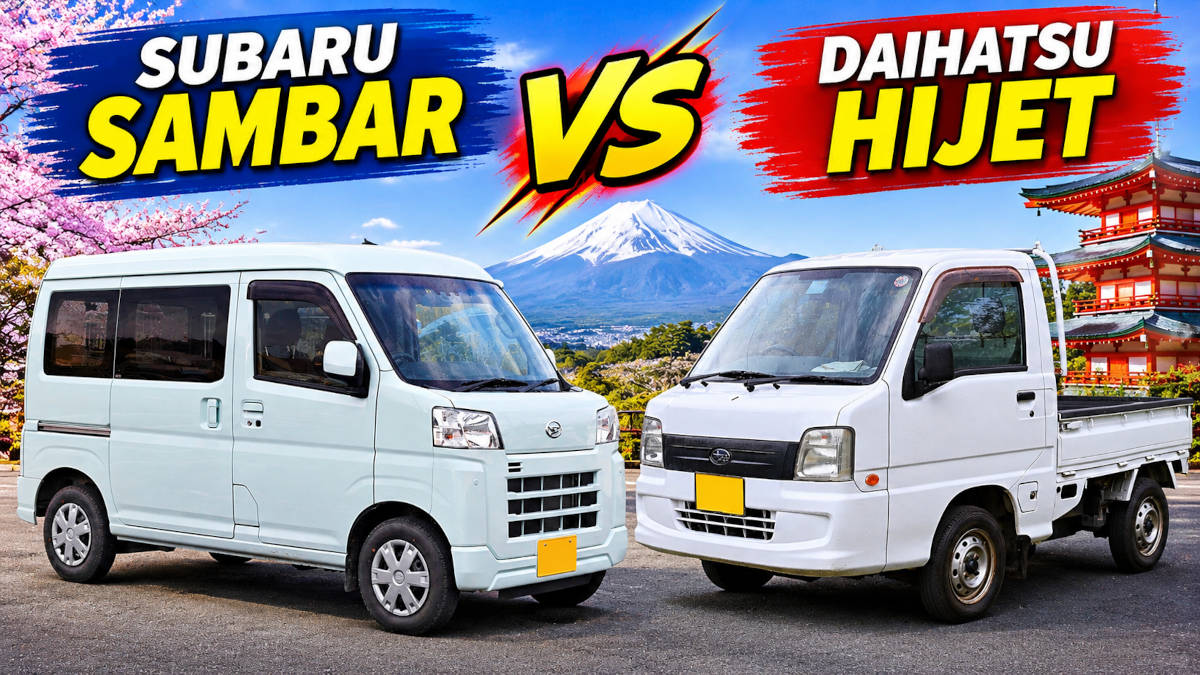
The Subaru Sambar and the Daihatsu Hijet are both kei trucks, and both have been built for work in Japan for more than 60 years. They differ in one way that matters most to a buyer: where the engine sits. The Sambar kept its engine behind the rear axle from its first generation in 1961 until its seventh generation in 2012. The Hijet moved its engine to a mid-mounted position behind the front axle in its fifth generation in 1977, and it has stayed mid-engined since. That single difference changes the weight balance, the traction, the cooling and the way each truck is serviced.
How do the Sambar and Hijet compare by era?
The table below sets out the main engine and layout changes for each truck, using the generation dates from the Wikipedia generation lists for each model. Check the exact model code and year on the chassis plate before you rely on any of these dates.
EraSubaru SambarDaihatsu Hijet 1960sFirst generation, 1961 to 1966. Rear engine, rear-wheel drive, 356 cc two-stroke twin rated at 18 PS.First generation, November 1960 to February 1966. Air-cooled 356 cc two-stroke twin. 1970s to 1980sThird generation from 1973. Four-stroke engines arrive in 1976. Four-wheel drive is optional from 1980.Fifth generation from 1977 places the engine mid-mounted behind the front axle. 1990sFifth generation from 1990 with a 658 cc engine. Full-time four-wheel drive is offered as an option.Eighth generation from 1994 with a 659 cc three-cylinder engine. Ninth generation from 1999 is mid-engined. 2012 to 2014Seventh generation from April 2012 moves the engine between the front passengers and drives the rear wheels. Subaru's kei production ended in February 2012.Tenth generation starts in September 2014. The engine is mid-mounted, with four-wheel drive on the S510P. 2014 onEighth generation from September 2014 offers all-wheel drive on the TC and the S510J, and later the TA.Still mid-engined, with a 660 cc engine.What does the rear engine change on the road?
A rear engine sits over the rear axle, so the weight of the engine and the gearbox is over the wheels that drive the truck. In a light vehicle, that adds grip under acceleration, which helps on wet or loose ground, provided the rear tires are in good condition. The load bed sits in front of that weight, so an empty Sambar can feel light at the front and needs care in corners and in braking.
A mid-mounted engine in the Hijet sits between the axles, which spreads the weight more evenly across the truck. Many owners find the Hijet easier to balance when the bed is loaded unevenly, though the difference depends on the generation, the load and the drivetrain.
Engine position also changes the service work. A rear engine is often easier to reach from the back of the truck but harder to reach from the side, and a rear-mounted cooling system needs clean air flow at the back of the truck. A mid-mounted engine can make some jobs harder, since the engine sits under the bed or the seats in many models. Ask a mechanic who works on these trucks how they access the parts you expect to replace.
What should a buyer check on a Sambar?
- The engine compartment at the rear, for leaks, cooling fan operation and signs of overheating.
- The rear tires and wheel bearings, which carry the engine weight and the drive forces.
- The four-wheel-drive system, if fitted. Engage it on a loose surface and listen for binding or uneven drive.
- The floor and body mounts near the rear, where rust and flex can hide.
- The cab and seating position in the generation you are considering, since the cab layout changed over the decades.
What should a buyer check on a Hijet?
- The engine mounts and the drivetrain, since the mid-engine layout puts stress on the mounting points.
- The cooling system and the air intake, which can collect dirt in the mid-engine layout.
- The four-wheel-drive engagement on the 4WD models, and the transfer case for leaks.
- The bed floor, sides and the area behind the cab, where water and debris collect.
- The model code and the generation, because the engine, body and parts all change between them.
Which truck should I buy?
- Define the load. Measure the bed you need, and find the rated payload for the exact model in its owner's manual. The badge does not set the payload.
- Decide on four-wheel drive. Choose the Sambar's rear-engine layout if the work involves loose ground and you can source its parts, and choose the Hijet's mid-engine layout if you want a more balanced truck with a wider parts supply.
- Check the manufacture date against the 25-year rule before you commit. Both trucks are kei vehicles, so the same US import rules apply to each.
- Inspect the specific truck. A truck's condition and history matter more than the layout alone.
For the wider class and its limits, see kei trucks explained. For a buying checklist that applies to both trucks, see the kei car buying guide.
Frequently asked questions
Is the Subaru Sambar a rear-engine truck?
Yes, for its first six generations, from 1961 until the seventh generation began in 2012. Its seventh generation, from 2012, moved the engine between the front passengers, but it still drove the rear wheels.
Is the Daihatsu Hijet mid-engined?
Yes, from its fifth generation in 1977. The ninth and tenth generations are also mid-engined.
Which truck has more payload?
The payload depends on the exact model, year and drivetrain, and the figure is set out in the owner's manual or the manufacturer's specification for that model. Compare those figures for the trucks you are considering, not the layout or the badge.
Are parts harder to find for the Sambar?
Availability depends on the generation and the market. Older rear-engine parts can be harder to find, so check the parts for your model code before you buy.
Verdict
The Sambar and the Hijet are built on different ideas. The Sambar's rear engine gives grip at the cost of balance and service access, and the Hijet's mid engine gives a more even layout. Pick the layout that fits the work, then choose the specific truck by its condition and its paperwork.